


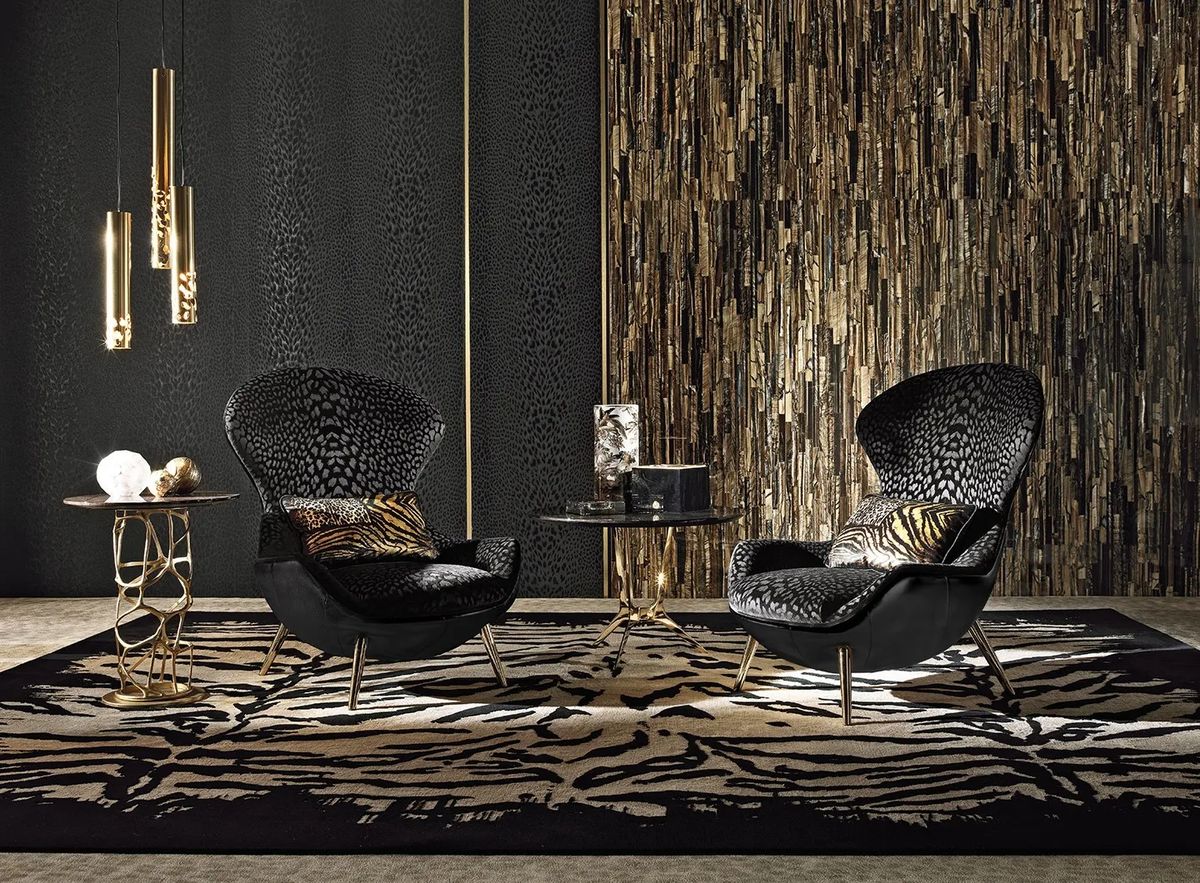


The Art of Bold Luxury: Finding Interior Inspiration in the Roberto Cavalli Aesthetic
From animal print and rich texture to dramatic materials and the unexpected, a designer’s look at bold luxury interior design—and how the expressive world of Roberto Cavalli can inspire a home with confidence, balance, and a point of view.
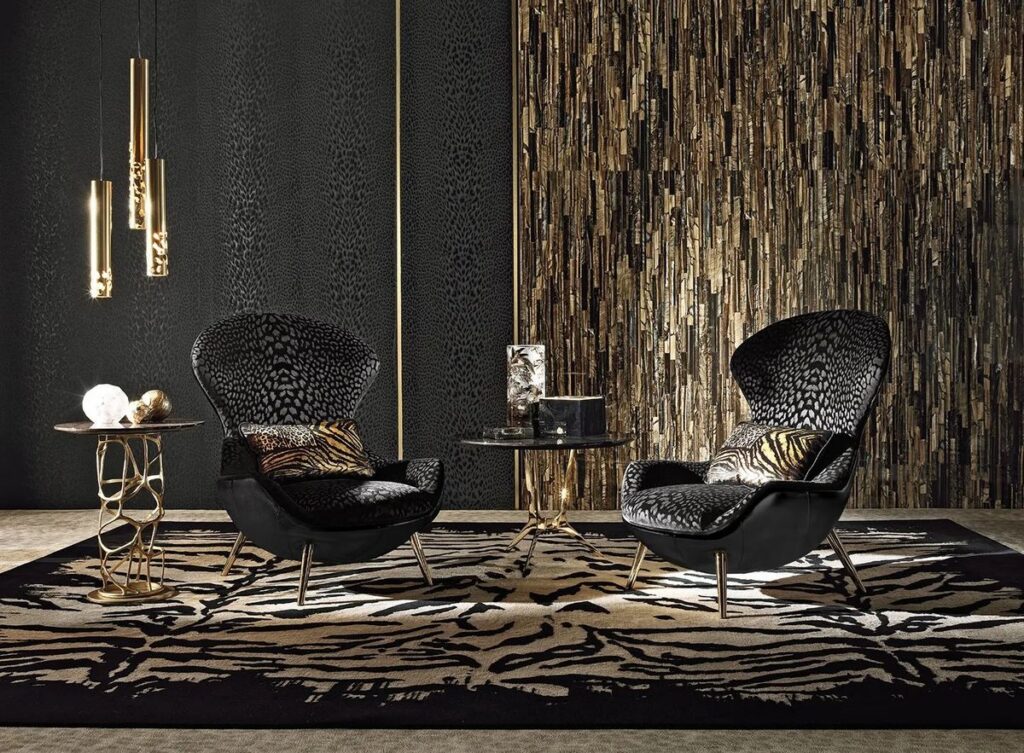
Bold luxury interior design is not about filling a room with dramatic things. It is about knowing how to balance pattern, material, scale, and contrast in a way that feels confident and beautifully considered.
Luxury does not have to be quiet to be sophisticated.
Some of the most memorable interiors are richly layered, expressive, and a little unexpected. They invite a second look. Above all, they have a point of view.
At Heather Robinson Designs, we are drawn to interiors with personality—spaces that embrace beautiful materials, unexpected details, and a little drama. It is one of the reasons the expressive world of Roberto Cavalli feels like such a natural source of inspiration.
Animal motifs, rich textures, natural patterns, dramatic materials, and glamour come together with an unmistakable confidence. The appeal is not any one element on its own, but the way they are brought together with such conviction.
For the home, that raises an interesting design question:
How do you create a room with drama and personality while keeping it beautifully balanced?
Because bold design is not simply about filling a room with bold things. The real skill lies in knowing what should lead, what should support it, and when to hold back.
Pattern, material, color, scale, and contrast all have a role to play.
Here are the design principles that make expressive luxury work.
1. Begin With a Point of View
One of the most compelling qualities of the Roberto Cavalli aesthetic is its certainty. It does not shy away from pattern, glamour, or drama.
In the home, that same confidence begins with a clear point of view.
The most memorable rooms know what they want to be. They may be dramatic or restrained, glamorous or collected, but there is a clear idea behind them.
In bold luxury interior design, the strongest elements need hierarchy. A dramatic sofa, heavily veined stone, patterned upholstery, statement lighting, and bold artwork may each be beautiful on their own. Bring them all into the same room with equal intensity, however, and they can quickly begin to compete.
A well-designed room has a sense of hierarchy. Something leads, while everything else plays its part.
Begin by deciding what will set the tone.
Perhaps the room begins with:
- An animal-print chair
- A wall of expressive stone
- A sculptural chandelier
- A lacquered cabinet in an unexpected finish
- An extraordinary work of art
Then consider the role of everything around it.
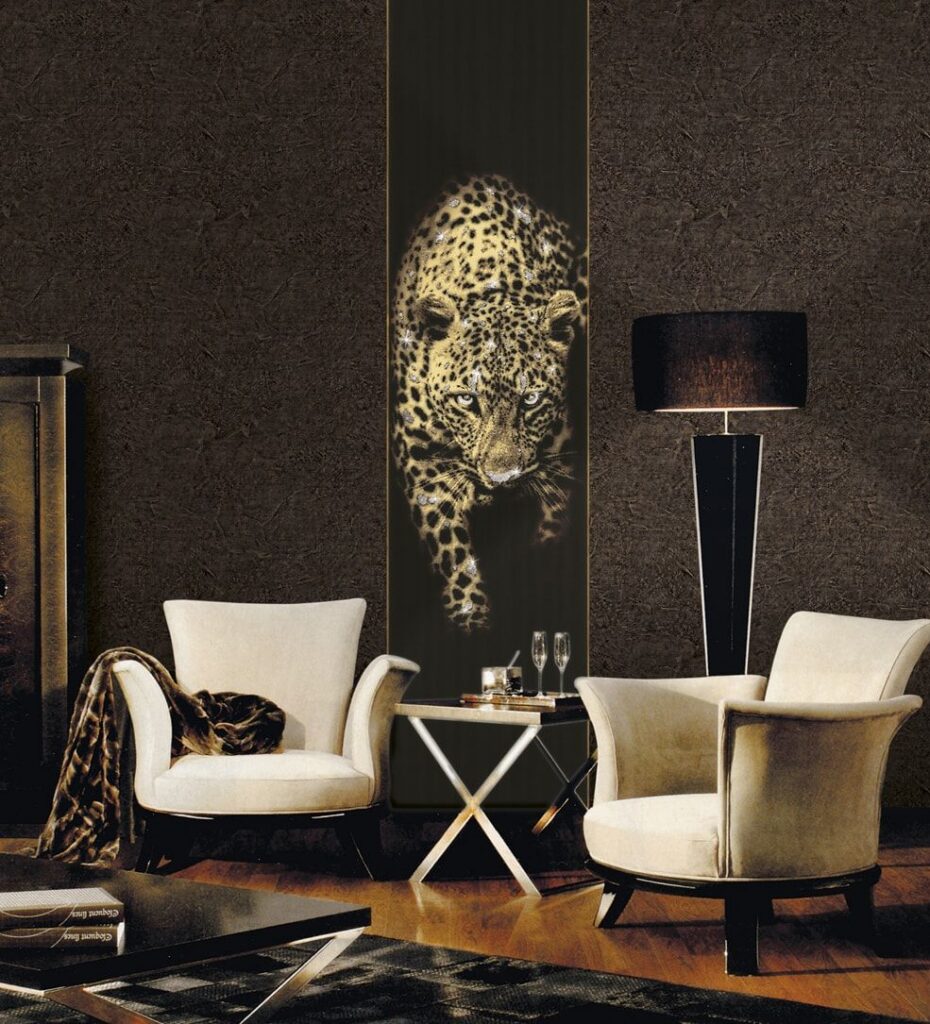
Imagine a beautifully upholstered leopard-print chair in an otherwise tailored living room. Pair it with a solid velvet sofa, warm wood, sculptural lighting, and a quieter palette. The chair still has presence, but the room around it gives it space to feel sophisticated.
That is the difference between a room filled with statement pieces and a room that truly makes a statement.
2. Let Animal Print Behave Like a Neutral
Animal print is one of the most recognizable elements of the Roberto Cavalli aesthetic—and one of the most interesting to translate into the home.
The pattern itself is not necessarily what makes a space feel busy. More often, it is everything competing around it.
Many animal patterns are built from naturally occurring neutrals: black, ivory, camel, chocolate, and warm brown. That is why they can sit surprisingly comfortably within a sophisticated interior.
Leopard can bring warmth to a tailored living room. Zebra can add graphic contrast to a quieter space. A subtle snakeskin-inspired texture can introduce interest without becoming the focal point.
Scale matters, too.
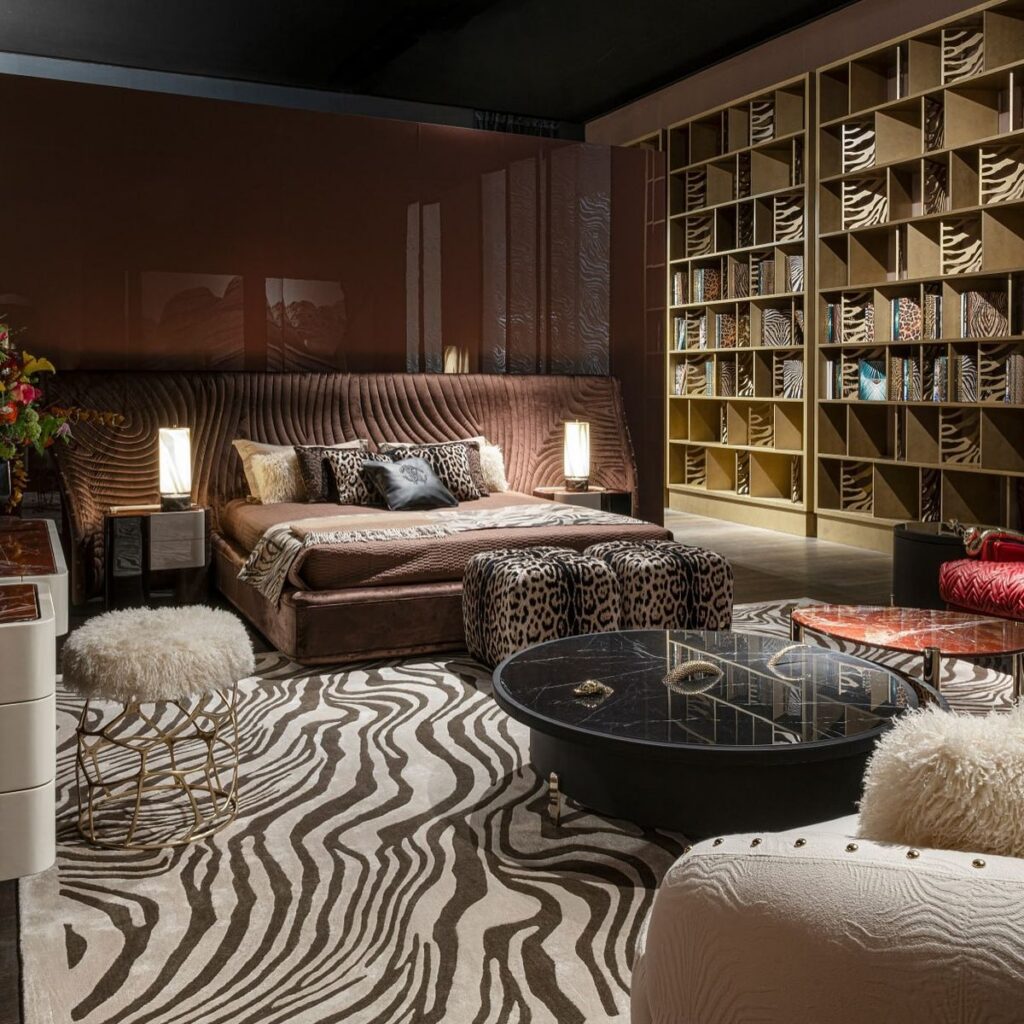
A zebra pattern across a large rug will shape the room very differently from the same motif used on a smaller accent chair or pillow. The larger the gesture, the more breathing room it usually needs.
Picture a leopard ottoman in a room of cream, chocolate, dark wood, and aged brass. It feels expressive, but still grounded. Add several equally strong patterns, and the eye no longer knows where to land.
Animal print does not always have to be the statement. Sometimes, it can simply become part of the room’s vocabulary.
3. How Texture Shapes Bold Luxury Interior Design
The best rooms engage more than the eye.
There is the softness of velvet as the light moves across it. The coolness of polished stone beneath your hand. The depth of lacquer. The warmth of aged metal. The natural movement of beautifully grained wood.
That sense of richness is central to the Cavalli world, where texture is rarely one-dimensional. For the home, the lesson is not simply to add more materials, but to choose materials that make one another more interesting.
Velvet feels even softer beside stone. A polished surface becomes more striking next to something organic. Dark wood gains warmth beside metal. Each material gives the other more presence.
Consider the contrast of:
Soft — velvet, mohair, tactile rugs
Polished — lacquer, glass, marble, metal
Organic — natural stone, richly grained wood, woven texture
A useful place to begin is with different material qualities rather than several variations of the same finish.
That might mean a velvet sofa beside a stone cocktail table and richly grained wood. Or a lacquered console paired with warm metal lighting and a tactile rug.

This is not a formula. It is simply a way of thinking about balance.
Some materials bring warmth, while others reflect light or introduce movement. Then there are those that simply give the eye somewhere to rest.
That mix is what gives a room richness.
4. Create Drama Beyond Color
Bold interiors do not always need a bold color palette.
Look closely at this kind of expressive luxury and much of the drama comes not from color alone, but from contrast: dark and light, polished and organic, patterned and solid.
Some of the most dramatic rooms are built from black, cream, chocolate, dark wood, and warm metallics. Their impact comes from the way those elements interact.
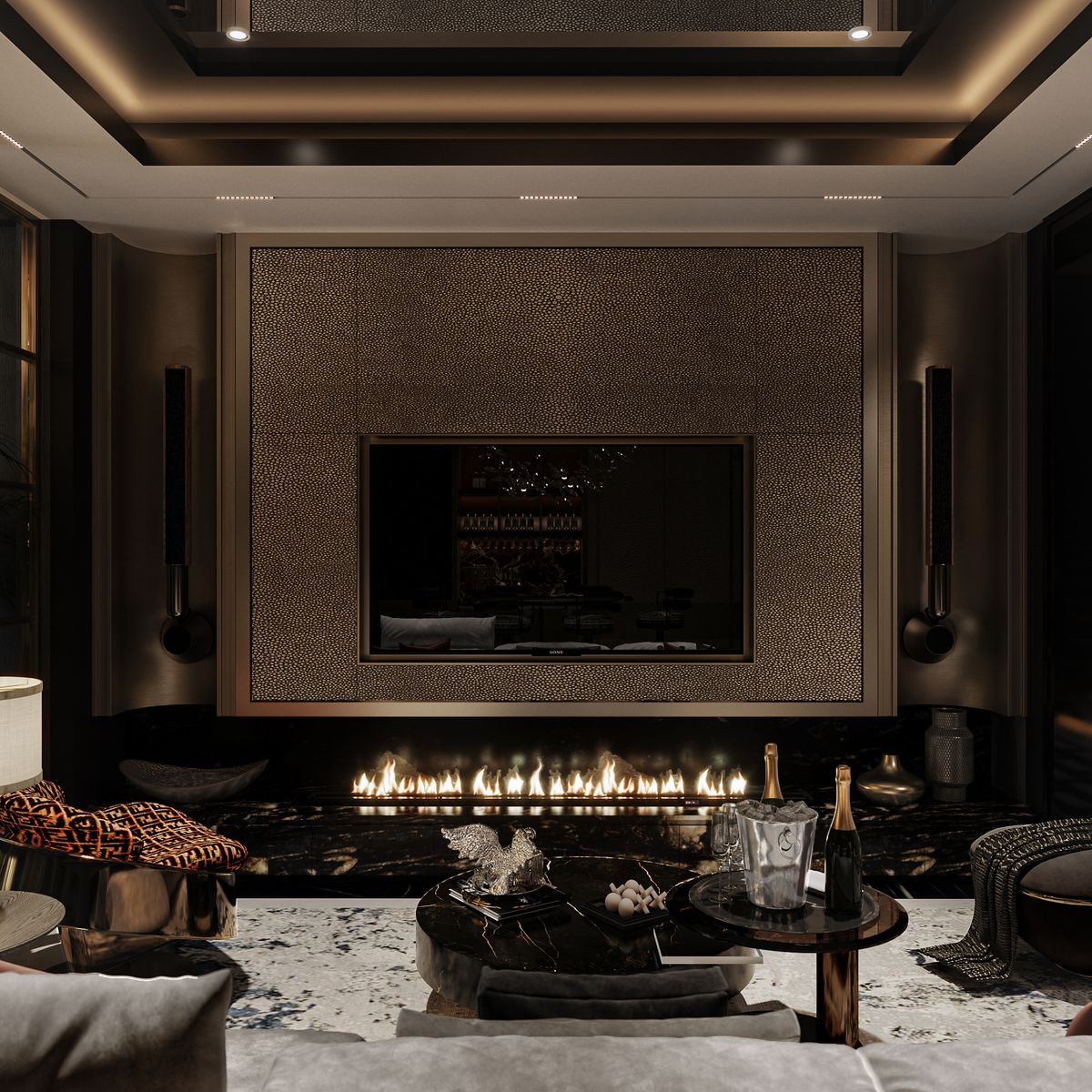
A black lacquered console can feel incredibly dramatic against a warm neutral wall. Expressive stone can bring more movement to a room than a brightly colored surface. Gold or bronze can catch the light and add warmth without dominating the palette.
And when deeper color does enter the room, it can be used with intention—a rich velvet upholstery, a work of art, or a single statement piece.
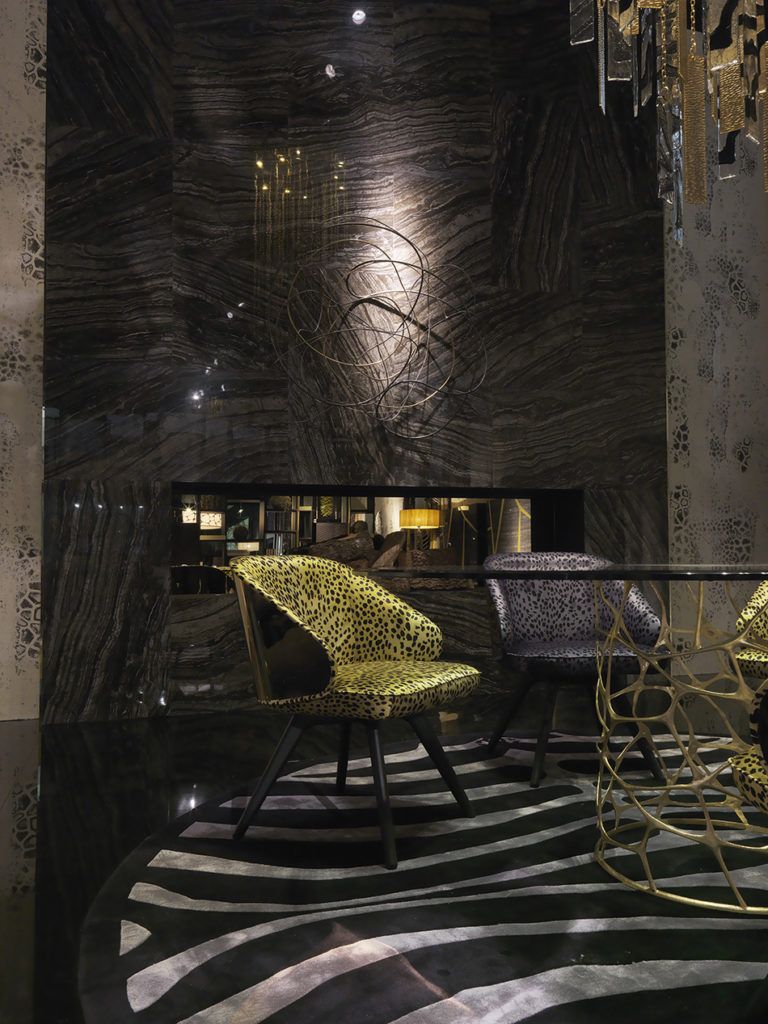
The strongest palettes do not ask every color to have equal attention. One or two tones may lead, while the rest support them through smaller accents and materials.
The same thinking applies to natural stone and wood.
Highly veined marble already brings movement, contrast, and color into a room. Rich wood grain can do the same. Give these materials a more controlled backdrop, and their natural pattern becomes part of the design.
Drama does not have to come from color alone.
5. Create a Moment—and Give It Room to Breathe
Every memorable interior has a moment.
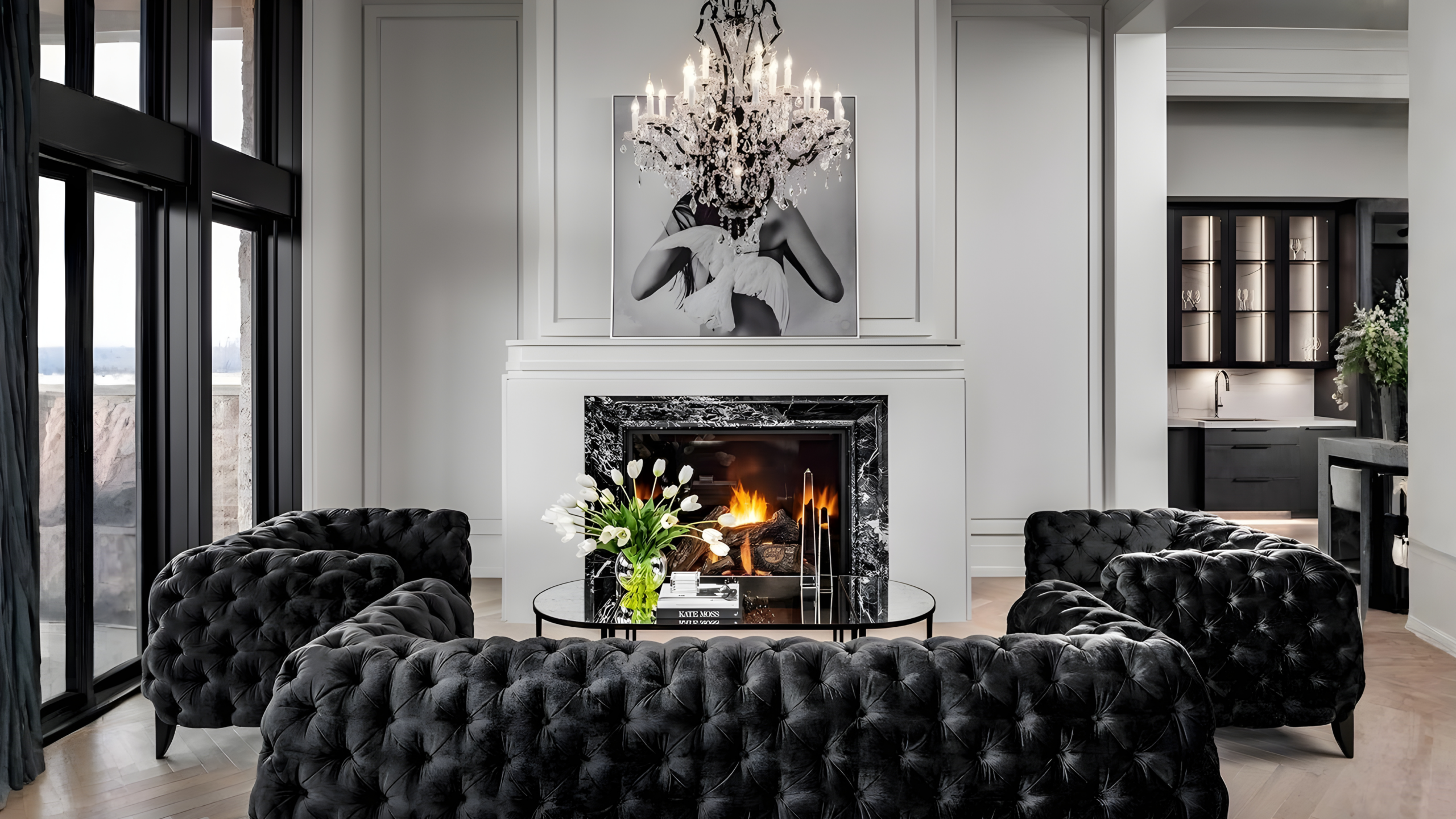
It may be an extraordinary chandelier suspended over a dining table. A sculptural sofa. A dramatic stone fireplace. A work of art that changes the entire energy of the room.
A beautifully designed space gives the eye a natural place to begin.
What do you want someone to notice first?
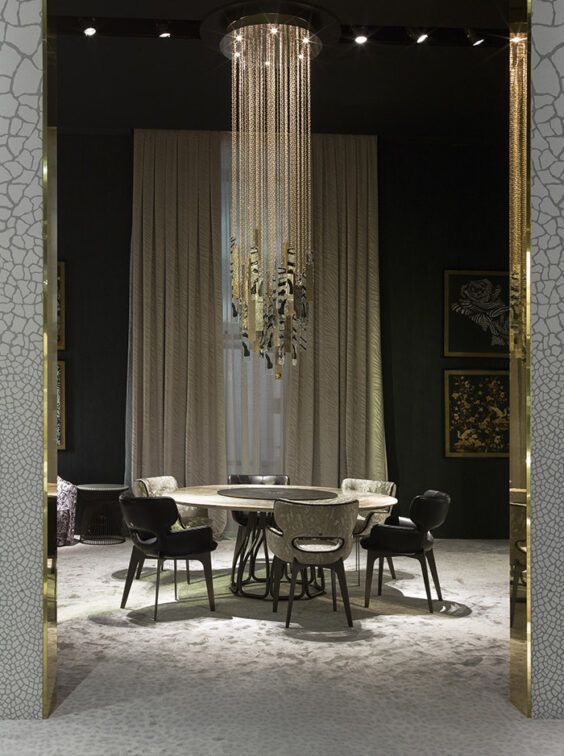
In a dining room, the chandelier may take center stage. A living room might draw the eye toward a dramatic fireplace or an exceptional piece of art. For an entry, a sculptural console or wall treatment can set the tone from the moment someone arrives.
Once that moment is established, the rest of the room should support it.
If the stone is highly expressive, repeating that same level of movement across the upholstery, artwork, and accessories can weaken its impact. Quieter furnishings give the stone visual priority.
A strongly colored sofa may benefit from a calmer architectural backdrop. When animal print is the star, the surrounding pieces can become more restrained.
This balance between expression and restraint is essential to bold luxury interior design.
But giving a focal point room to breathe does not mean the rest of the space should be uninteresting. The most beautiful interiors reveal themselves in layers.
You notice the chandelier first. Then the texture of the wall covering. The detail on a cabinet. An unexpected fabric on the back of a chair. The precise way two slabs of stone meet.
Some areas draw the eye. Others allow it to rest.
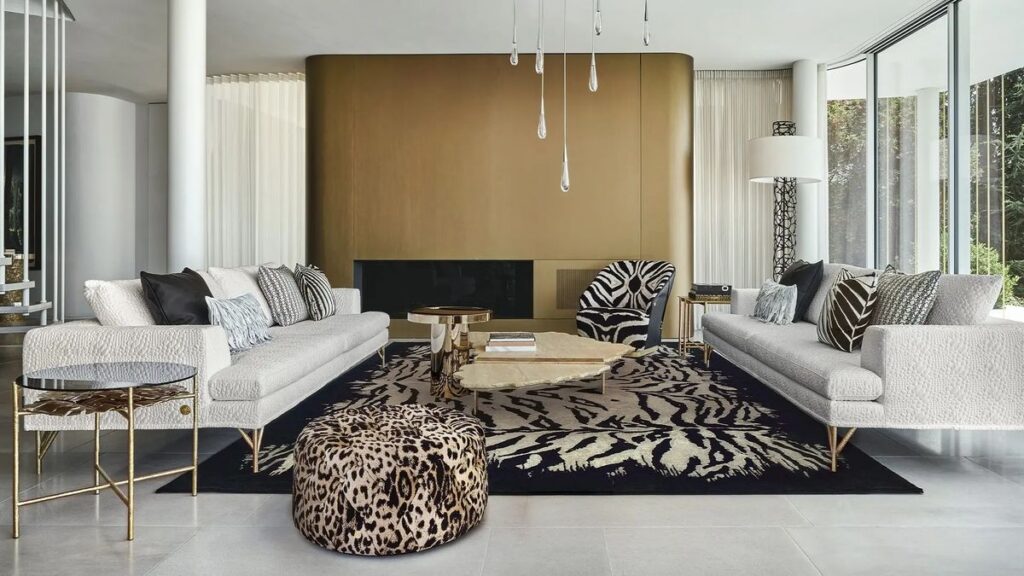
That rhythm is what keeps a richly layered interior from feeling overwhelming—and gives the pieces you love most a chance to be fully appreciated.
If you look around a room and cannot decide where your eye should land first, it may simply need a little editing.
6. Make Room for the Unexpected
Perhaps one of the most useful ideas to take from the Roberto Cavalli aesthetic is the freedom to choose something unexpected.
Perfectly coordinated rooms can certainly be beautiful.
But they can also feel predictable.
The rooms we remember often contain something that shifts the expected balance:
- A glamorous velvet sofa beside a raw stone table
- Animal print within contemporary architecture
- A highly polished surface paired with an aged, imperfect object
- Fine art displayed beside something discovered while traveling
These contrasts give a home personality. They keep a room from feeling as though everything came from the same collection or was chosen on the same day.
If a space feels too polished, something with history, texture, or imperfection can change its energy. A more traditional room might benefit from the contrast of a sculptural contemporary piece. And when a space feels a little too restrained, one unexpected pattern may be all it needs.
The unexpected element should still belong in the room. There may be a connection through color, material, proportion, or simply the story behind the piece.
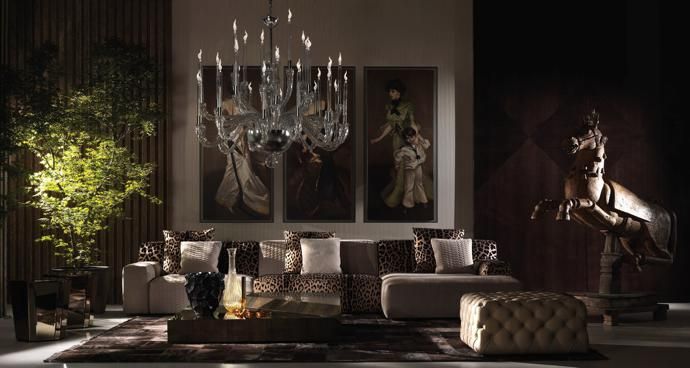
7. Make the Inspiration Personal
This is also where inspiration becomes personal.
A love of animal print may sit alongside contemporary art. Rich velvet and dark wood may share a room with pieces collected while traveling. Dramatic stone may become the backdrop for something deeply meaningful.
Rather than thinking about an aesthetic as a set of elements to follow, consider what it is that draws you in.

Is it the confidence of the pattern?
The richness of the materials?
The drama of the contrast?
Or simply the sense that the room is not afraid to have personality?
From there, the design should respond to the home itself: its architecture, the pieces already worth keeping, the way you entertain, and the way you live every day.
A beautiful room is not simply a collection of beautiful things. The pieces need to relate to one another—and, more importantly, to the people who live among them.
The most interesting homes rarely feel as though every piece arrived on the same day. They evolve. Something new beside something collected. Something glamorous alongside something deeply personal. Fine art beside an object with a story.
The inspiration may come from many places. What makes the interior special is where you take it.
Bringing the Inspiration Home
Bold luxury interior design begins with confidence, but it works through balance. If you are drawn to the expressive glamour of the Roberto Cavalli aesthetic, the goal is not to introduce every idea at once. Think of the room in layers.
Begin With a Strong Foundation
Choose a palette and materials that give the room somewhere to begin. This may be cream and dark wood, black and warm metallics, or something richer and more colorful.
Introduce One Expressive Element
Animal print, dramatic stone, a sculptural piece, or an unexpected material can establish the personality of the room.
Build Contrast Through Materials
Bring together surfaces with different qualities. Something soft, something polished, and something organic is a useful place to begin.
Establish the Visual Hierarchy
Decide what should be noticed first, then allow the rest of the room to support that moment.
Edit With Intention
Step back and look at the room as a whole. If several elements are fighting for attention, one may need to become quieter.
The result should not feel like an exercise in following an aesthetic. It should feel like your own home—with more confidence, richness, and perhaps a touch of the unexpected.
The Most Luxurious Thing Is Individuality
Trends will always come and go. Individuality endures.
The most memorable homes are not necessarily the quietest or the boldest. They are the ones that could belong to no one else.
The appeal of the Roberto Cavalli aesthetic is not found in any single animal print, material, or color. It is found in the confidence behind the choices—the willingness to embrace beauty, drama, and individuality.
For the home, that confidence can take many forms. It may be a leopard-print chair in an otherwise tailored room, a dramatic piece of stone, a richly layered mix of materials, or simply one unexpected piece that changes the energy of the space.
That is perhaps the most interesting thing about looking to fashion, art, travel, and other creative worlds for inspiration. A pattern, a material, a color, or a mood may be the beginning of an idea, but the home itself should take that idea somewhere personal.
If you love animal print, use it beautifully. Let dramatic stone command the room when it stops you in your tracks. And when a little glamour feels right, embrace it.
A home should not be designed around what everyone else will approve of. It should be designed around the life you want to live within it.
At its best, bold luxury interior design is deeply personal. It gives you the freedom to embrace pattern, dramatic materials, rich texture, and the unexpected while creating a home that still feels entirely your own.
Knowing what you love is the beginning. Bringing those ideas together—balancing scale, material, color, pattern, and the way a home needs to function—is where thoughtful design makes the difference.
That is where inspiration becomes something entirely your own.
Ready to Create a Home With a Point of View?
At Heather Robinson Designs, we create interiors that are deeply personal, beautifully layered, and never afraid of a point of view. Whether your idea of luxury is quietly refined or unapologetically bold, we would be delighted to help you create a home that feels unmistakably yours.
Ready to create a home with a point of view? We would love to begin the conversation.



Read the Comments +