


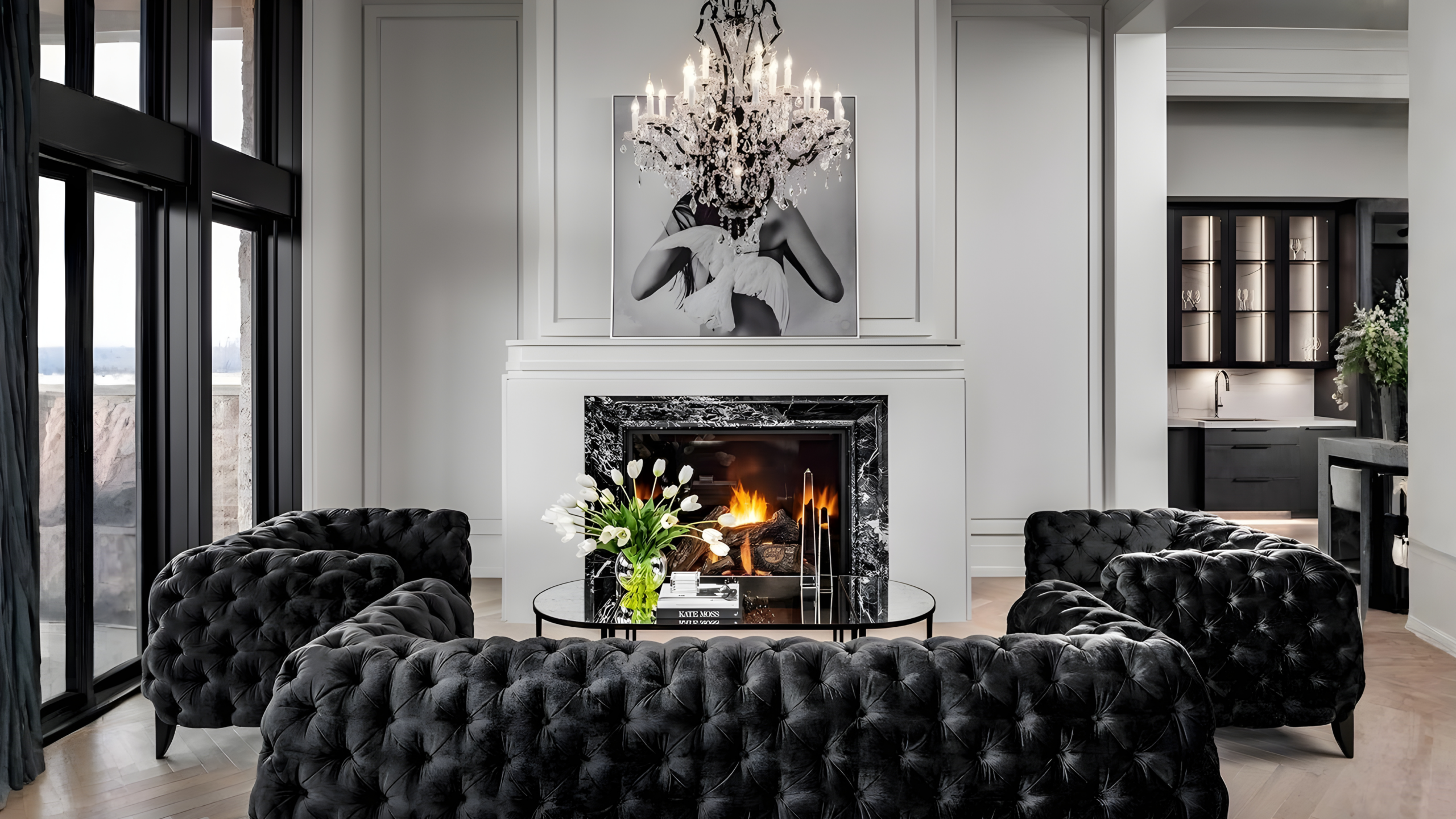


The Power of Black Accents in Interior Design
How to use black in interior design to create depth, structure, and timeless sophistication
There’s a reason certain interiors feel immediately more refined — even when you can’t quite explain why.
It’s not the furniture.
Not the color palette.
Not even the styling.
More often than not, it comes down to contrast — and how deliberately it’s used.
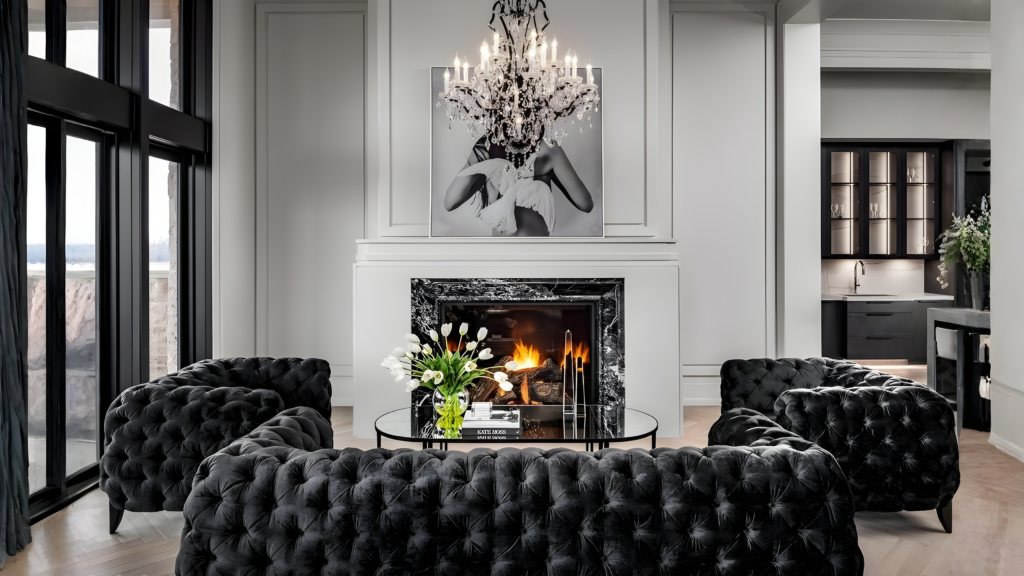
Black, when introduced with precision, has the ability to define a space in a way few other elements can.
It sharpens architecture, anchors composition, and brings a quiet sense of order to even the softest interiors.
Once you begin to notice it, you’ll see it everywhere.
Use Black to Frame and Define Architectural Elements
The most impactful way to introduce black is through architecture itself.
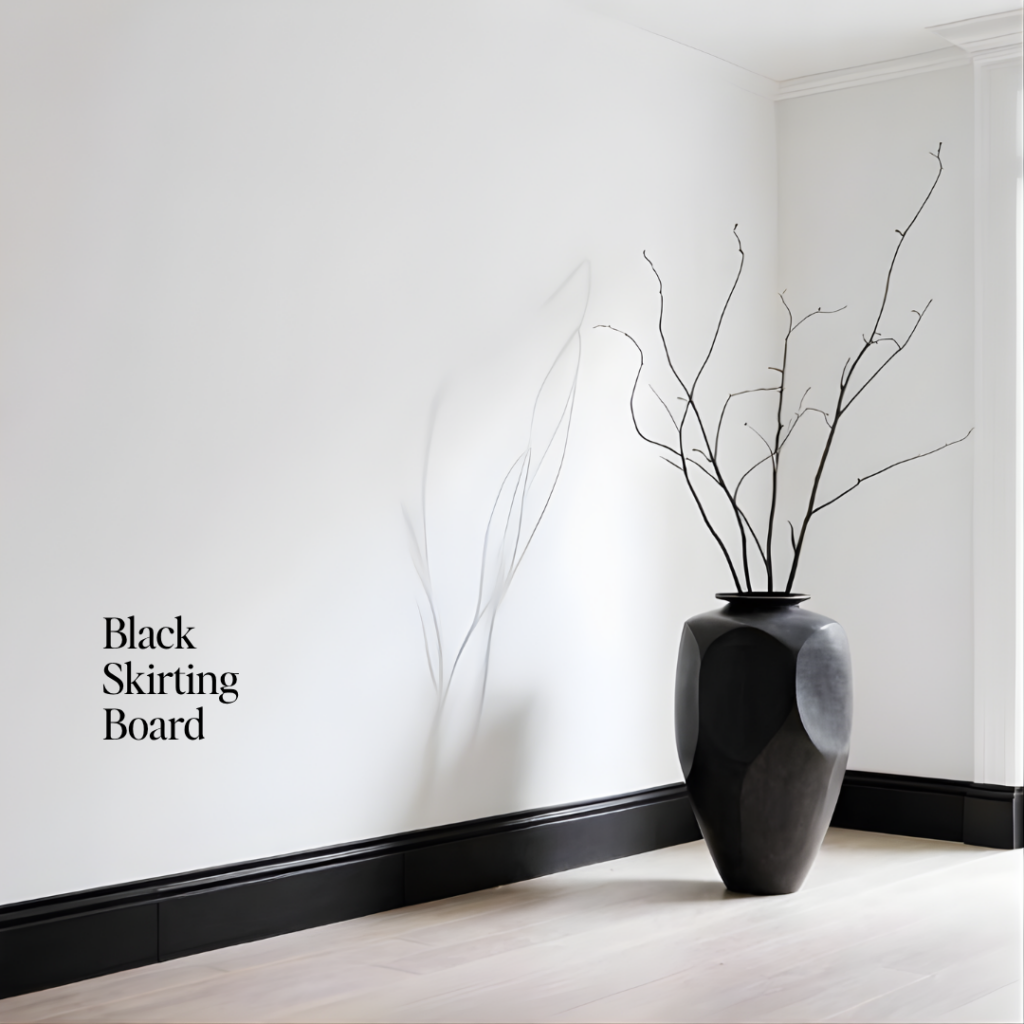
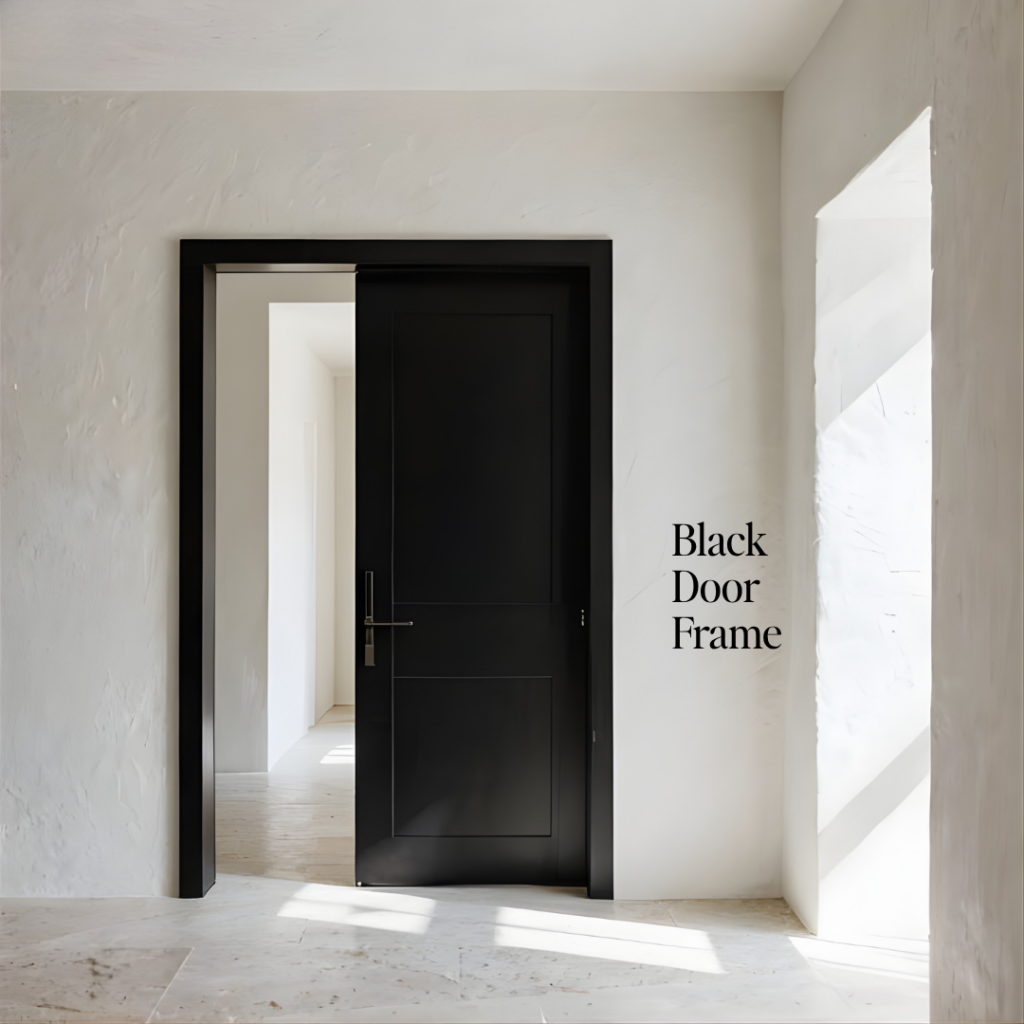
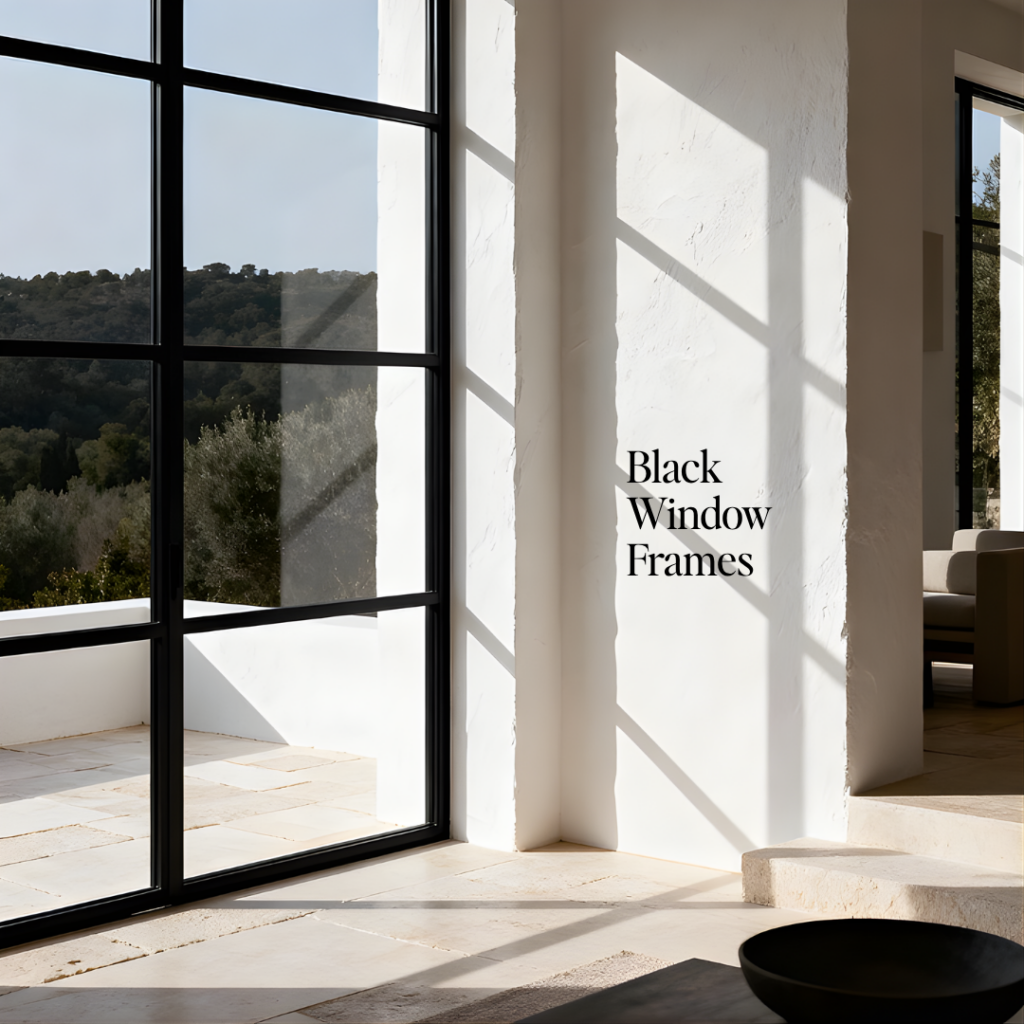
Details such as skirting boards, door frames, internal doors, and window frames act as visual outlines.
When executed in black, they sharpen the geometry of a room and give it a more structured, intentional feel.
Black window frames, for example, draw attention to natural light and exterior views, while black doors create contrast that makes transitions between spaces more pronounced.
How to apply this in your space:
- Use black window frames to highlight views or natural light
- Paint interior doors black to create contrast in neutral spaces
- Introduce dark skirting boards to ground lighter walls
- Keep the application consistent for a cohesive look
Why this works:
- It defines boundaries without adding visual clutter
- It enhances proportion and symmetry
- It creates a more architectural, custom feel
When black is integrated at this level, it becomes part of the structure — not decoration.
Introduce Black Through Fine Details and Hardware
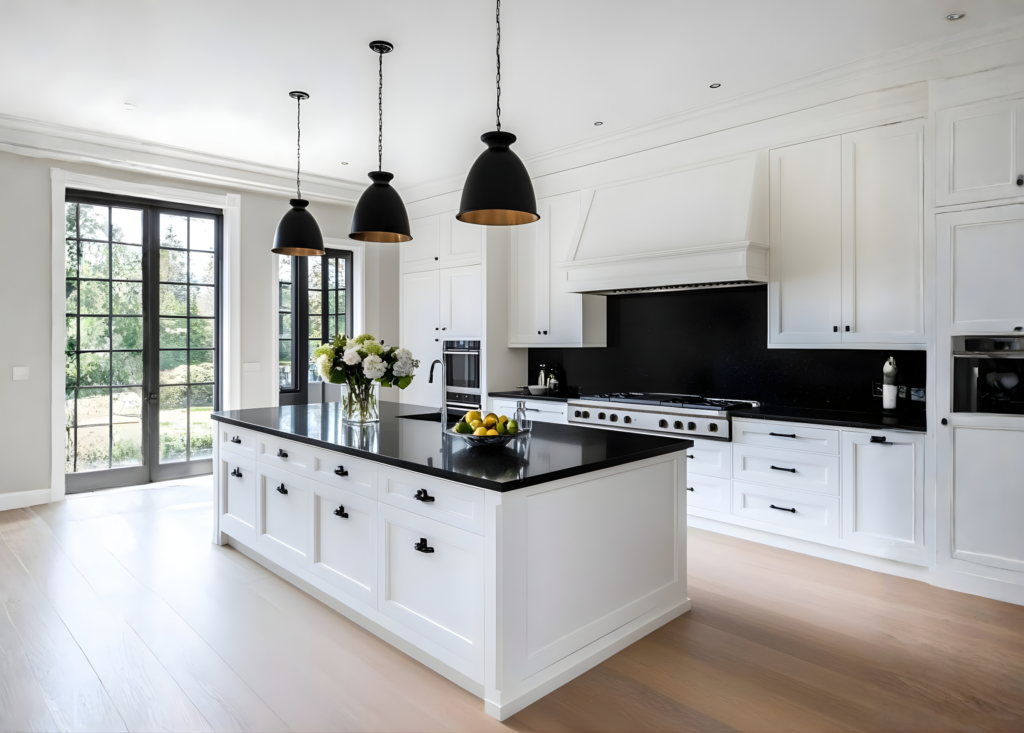
Once the architectural framework is established, black can be layered more subtly through details.
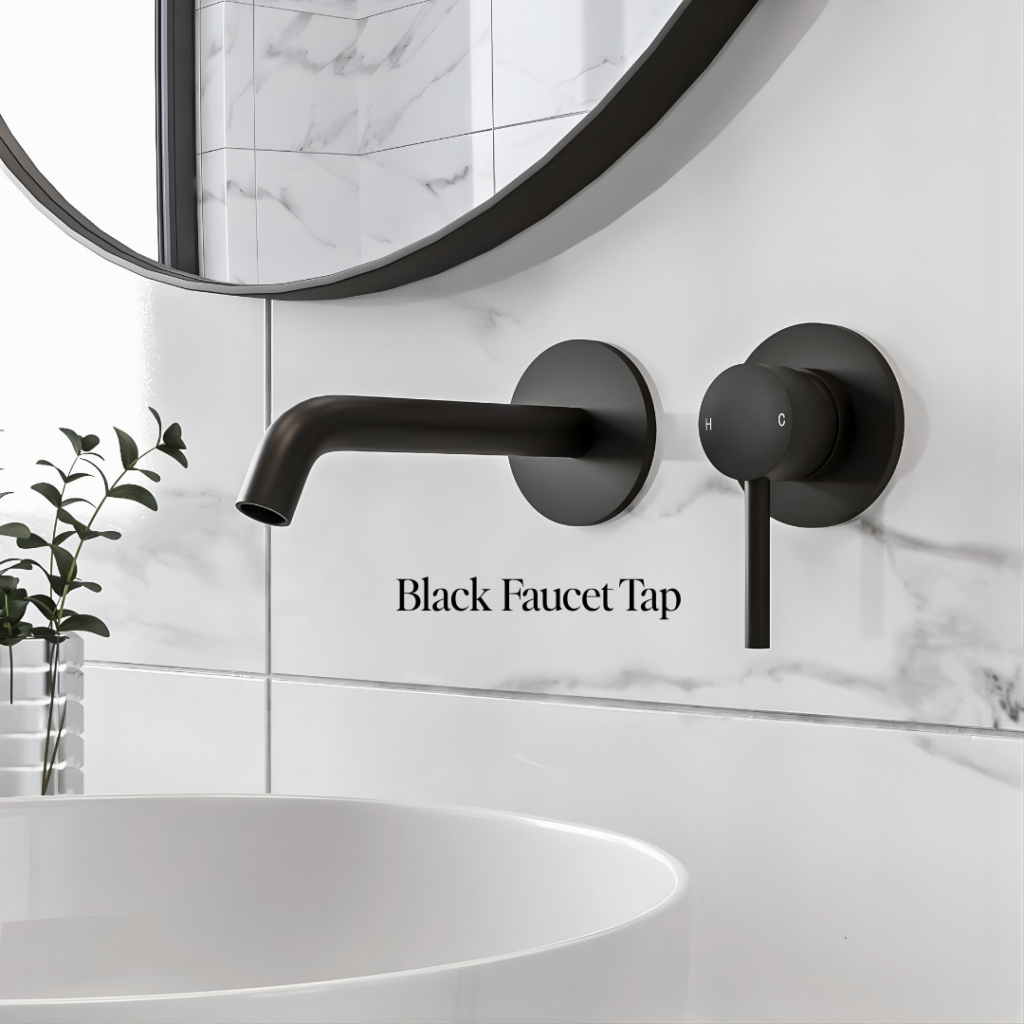
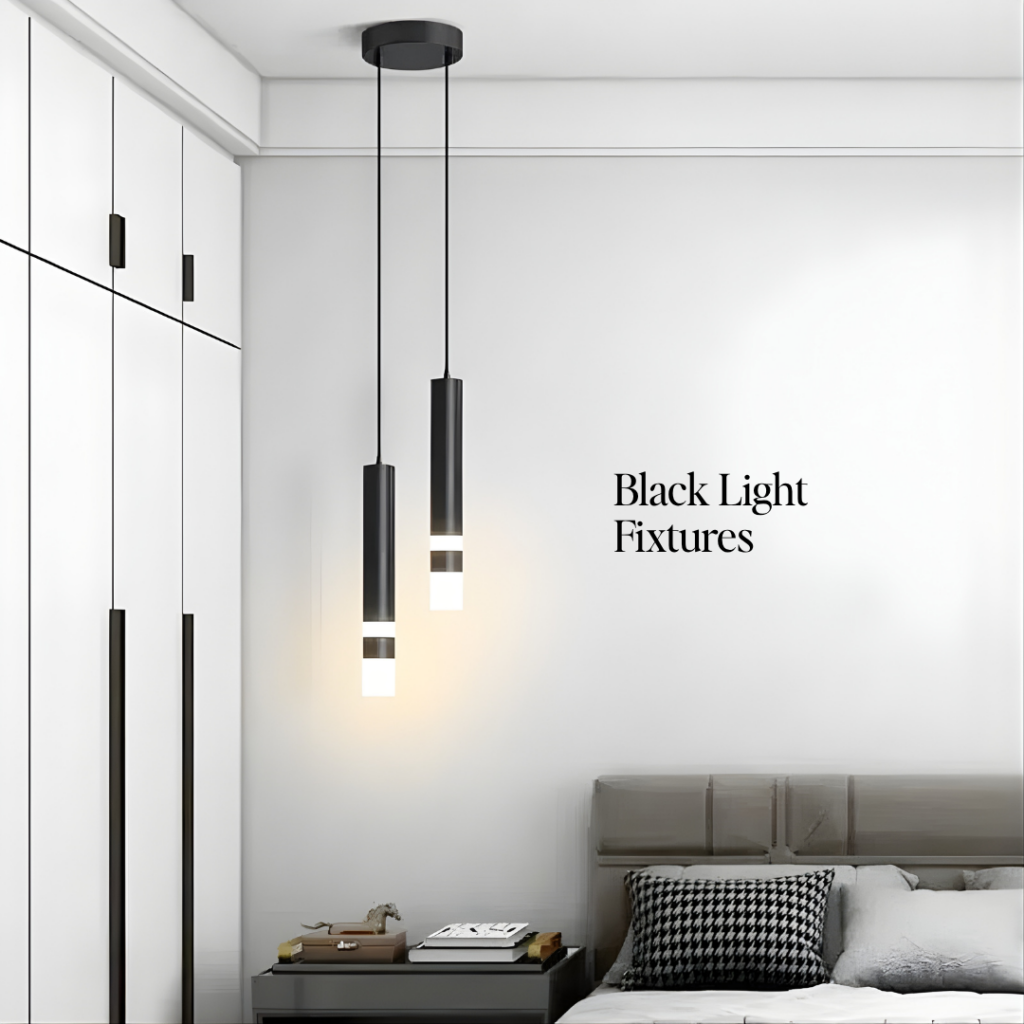
Hardware — often overlooked — plays a significant role in how refined a space feels. Cabinet handles, taps, door levers, and light fixtures in black finishes create continuity across rooms.
The effect is understated, yet incredibly effective.
How to apply this in modern interiors:
- Choose matte black or brushed black hardware for cabinetry
- Repeat black finishes across lighting, plumbing, and door hardware
- Avoid mixing too many finishes — consistency is key


Why this works:
- It ties different elements together visually
- It adds contrast without overwhelming the space
- It elevates everyday functional elements into design features
These smaller details are often what distinguish a well-designed interior from an average one.
Anchor the Space with Black Furniture and Lighting
In rooms dominated by lighter tones, black elements are essential for balance.
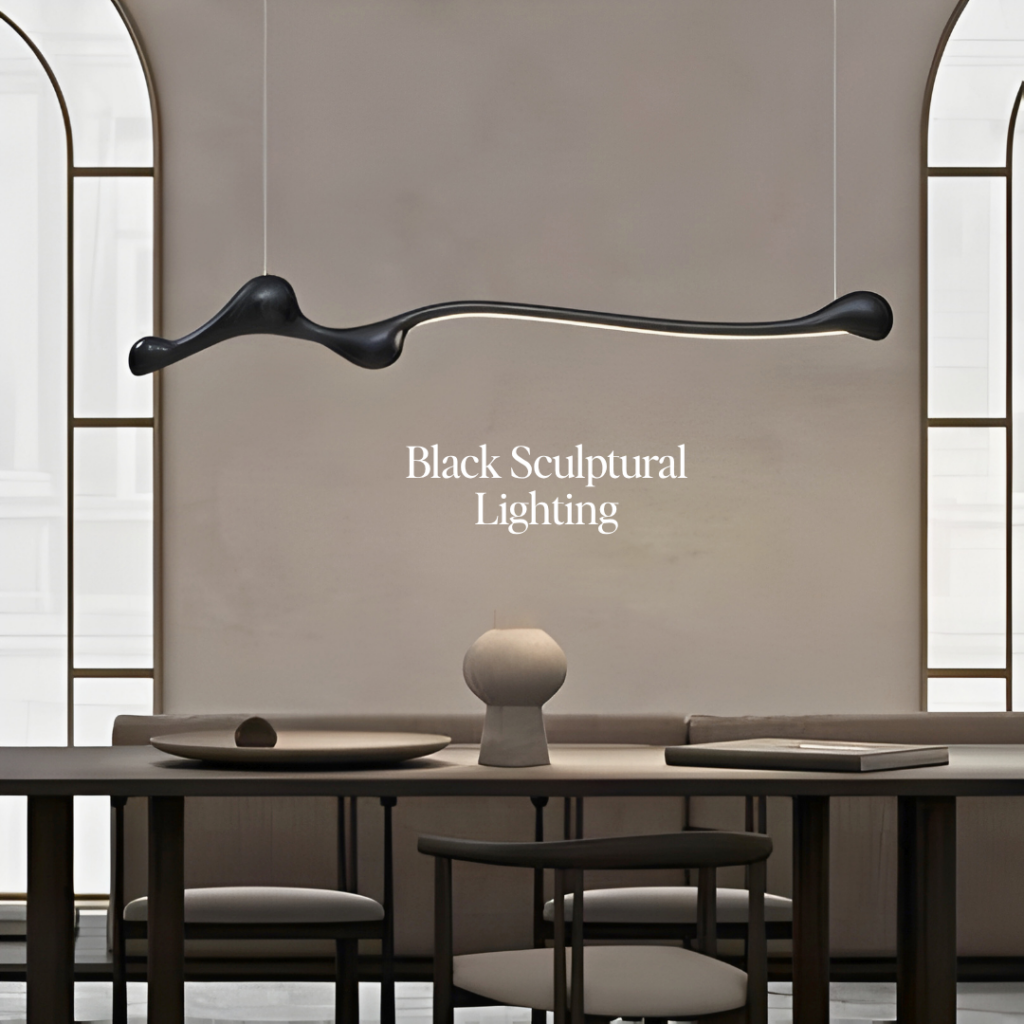
Statement furniture pieces — such as a black dining table, a coffee table, or sculptural lighting — introduce visual weight. They help anchor the room and prevent it from feeling too soft or undefined.
In contemporary interiors, grounding is what gives a space presence.
How to apply this effectively:
- Use one or two black statement pieces rather than many small ones
- Position darker furniture centrally to anchor the layout
- Pair black with warm materials like wood, linen, or stone


Why this works:
- It creates a focal point within the space
- It balances lighter palettes and soft textures
- It adds depth and contrast to the overall composition
Black, when used in furniture, acts as the visual “anchor” of the room.
Using Black More Boldly: Floors and Feature Walls
While black is often most effective in smaller, controlled applications, it can also be used more boldly — provided it is handled with precision.
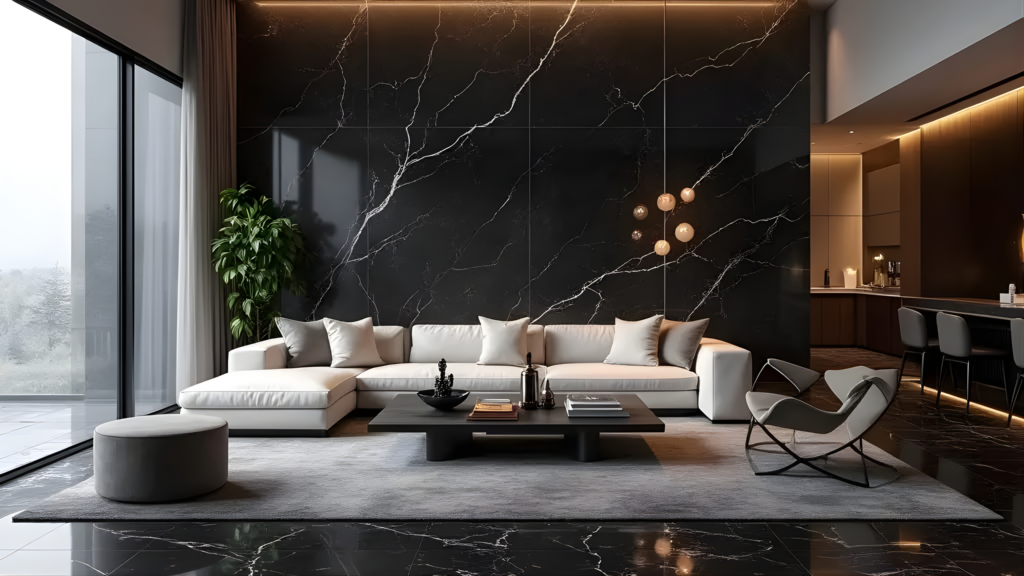
Black floors and accent walls introduce a deeper level of contrast.
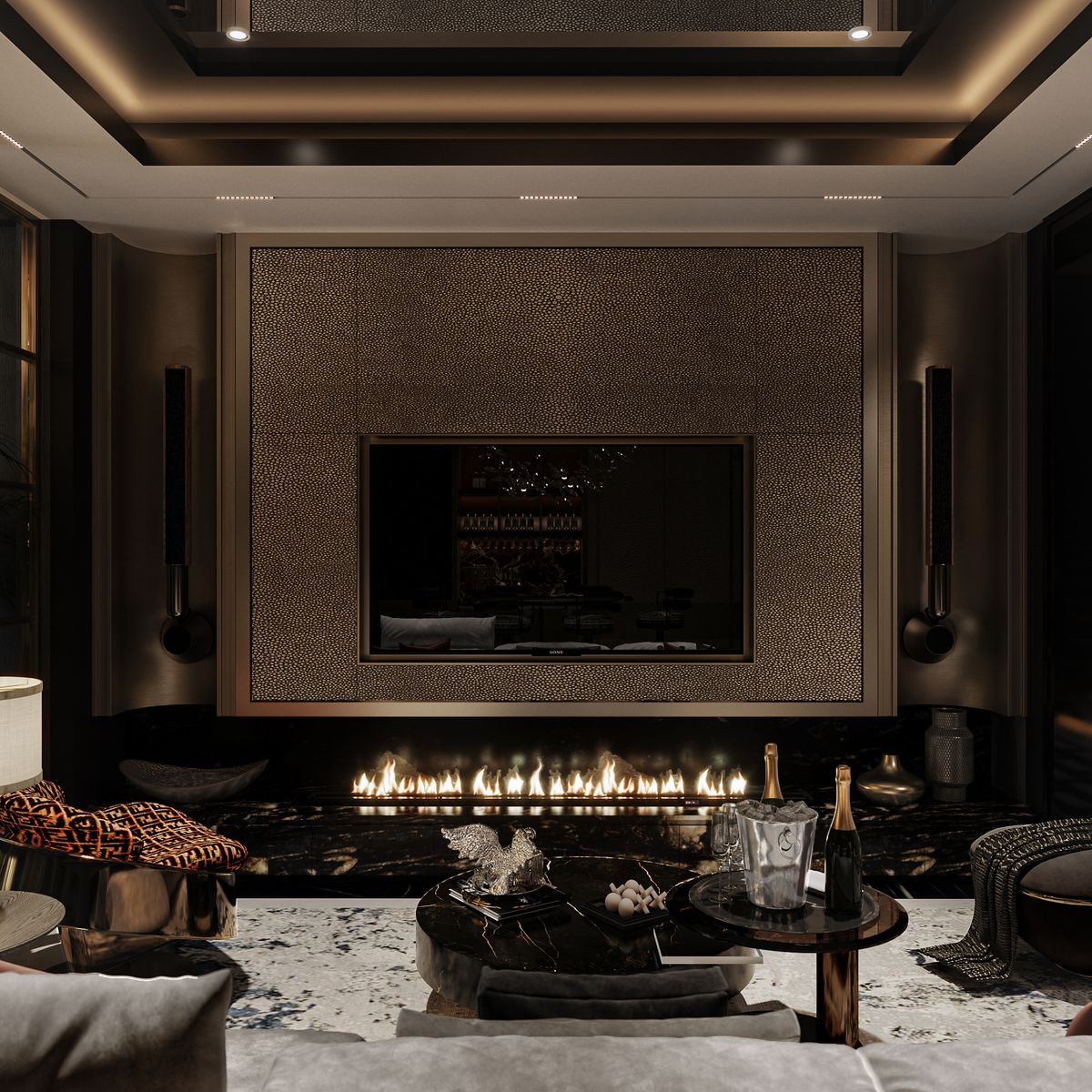
They shift the atmosphere of a space immediately, adding weight, drama, and architectural presence.
A black floor, for instance, can ground an entire interior, particularly when paired with lighter walls and warm materials.
It creates a strong visual base that allows furnishings and textures to stand out more clearly.
Similarly, a black accent wall can define a focal point — behind a bed, within a living area, or as a backdrop to artwork or shelving.
When executed thoughtfully, it enhances depth rather than darkening the space.
How to approach this successfully:
- Balance with ample natural light or layered lighting
- Pair with warm materials such as wood, linen, or stone
- Avoid using black on multiple large surfaces in smaller rooms
- Keep surrounding elements restrained to prevent visual heaviness


Why this works:
- Introduces depth and visual drama
- Grounds the overall composition
- Creates strong focal points within a space
Used sparingly, these larger applications of black can feel incredibly refined.
Used excessively, they can quickly become overwhelming.
The distinction lies in restraint.
Soften Contrast with Layered Textiles and Art
While black is inherently bold, it does not need to feel stark.
Layering is what transforms contrast into something more nuanced.
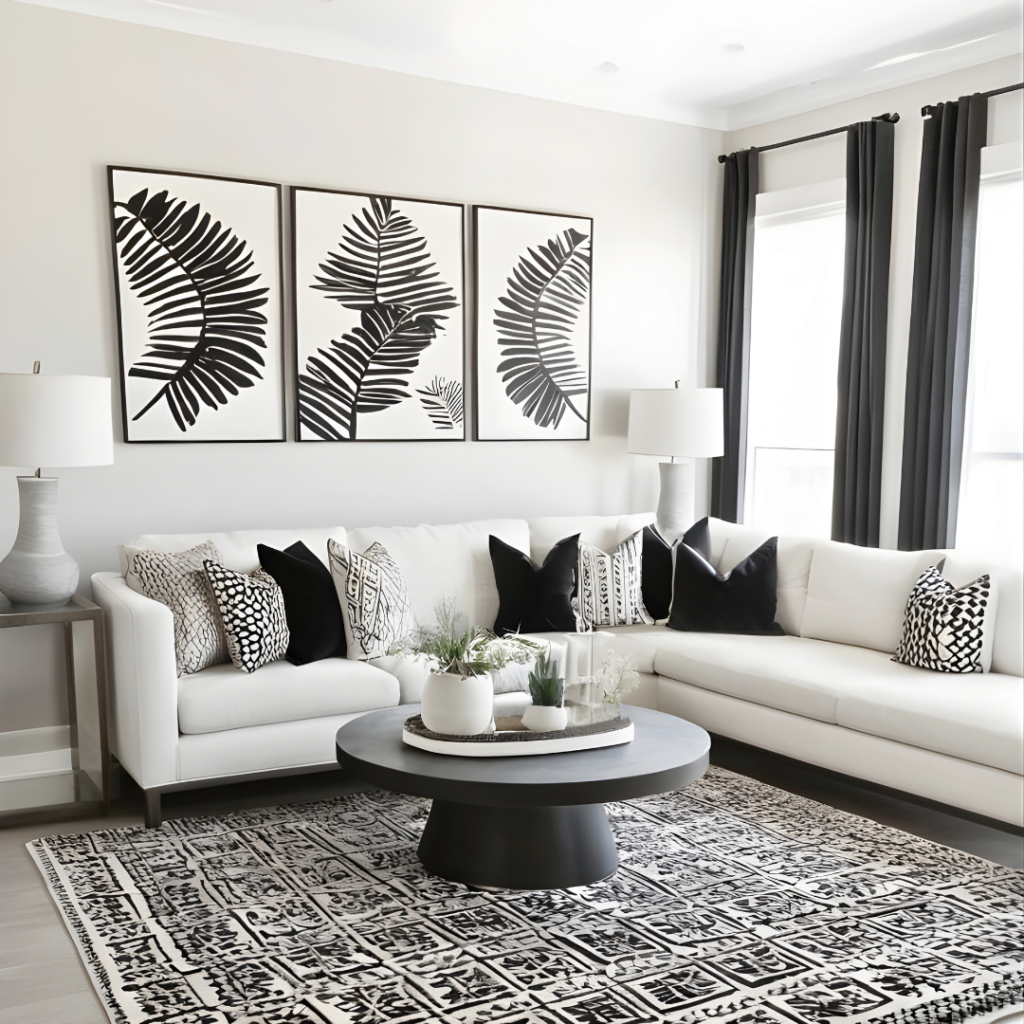
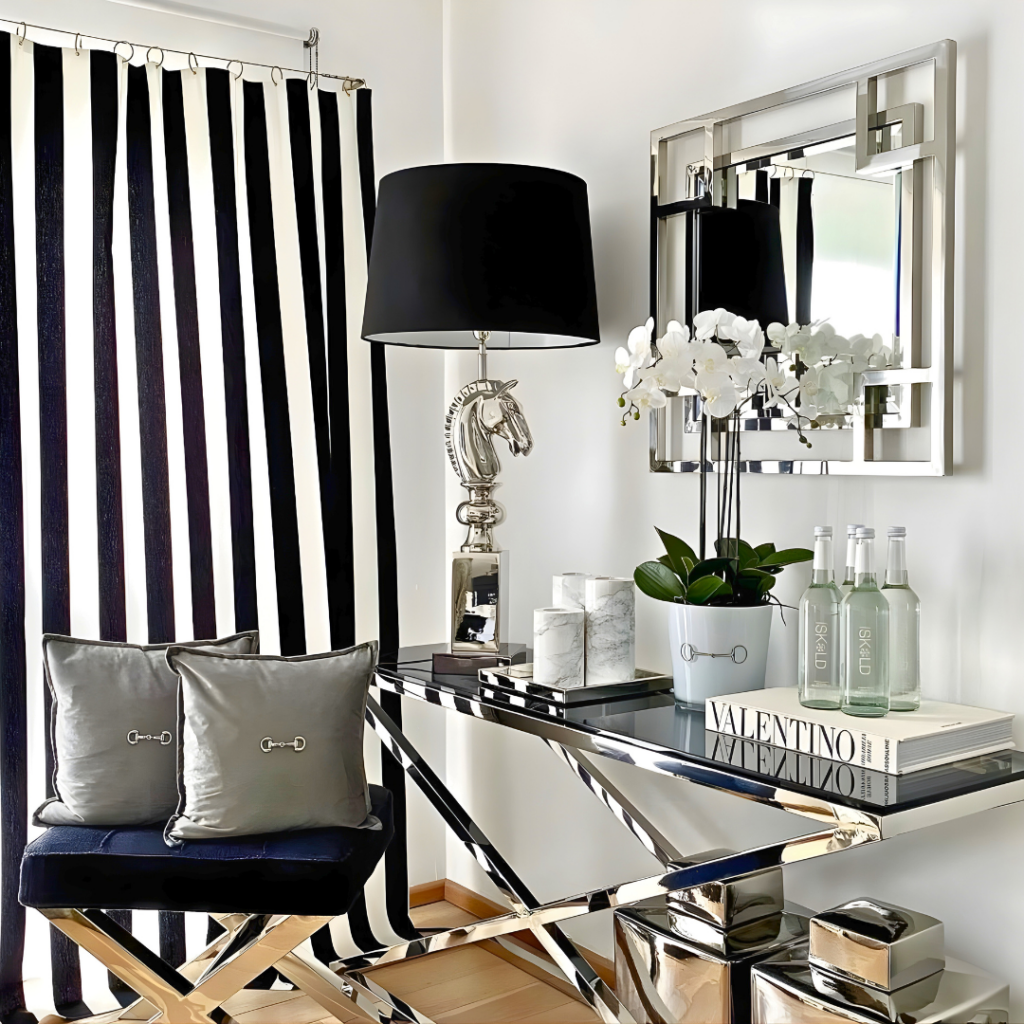
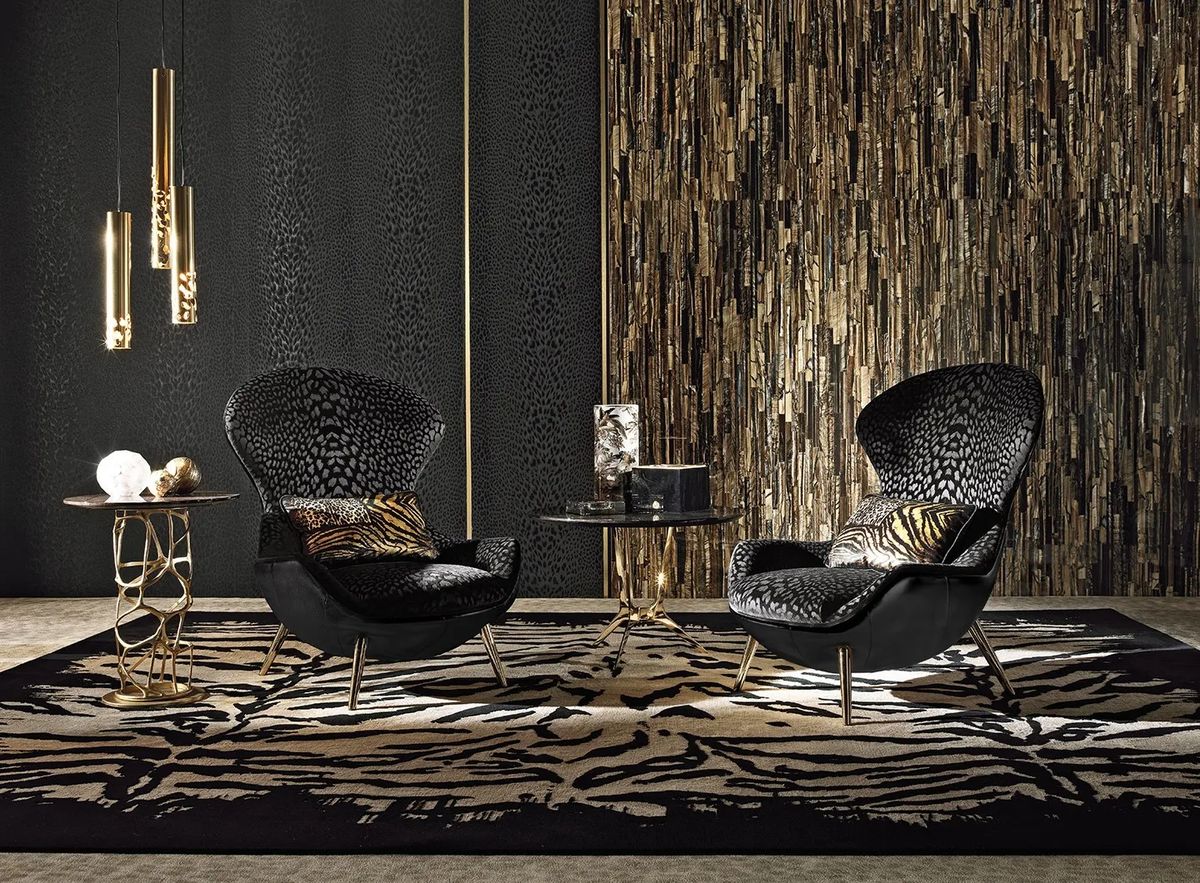
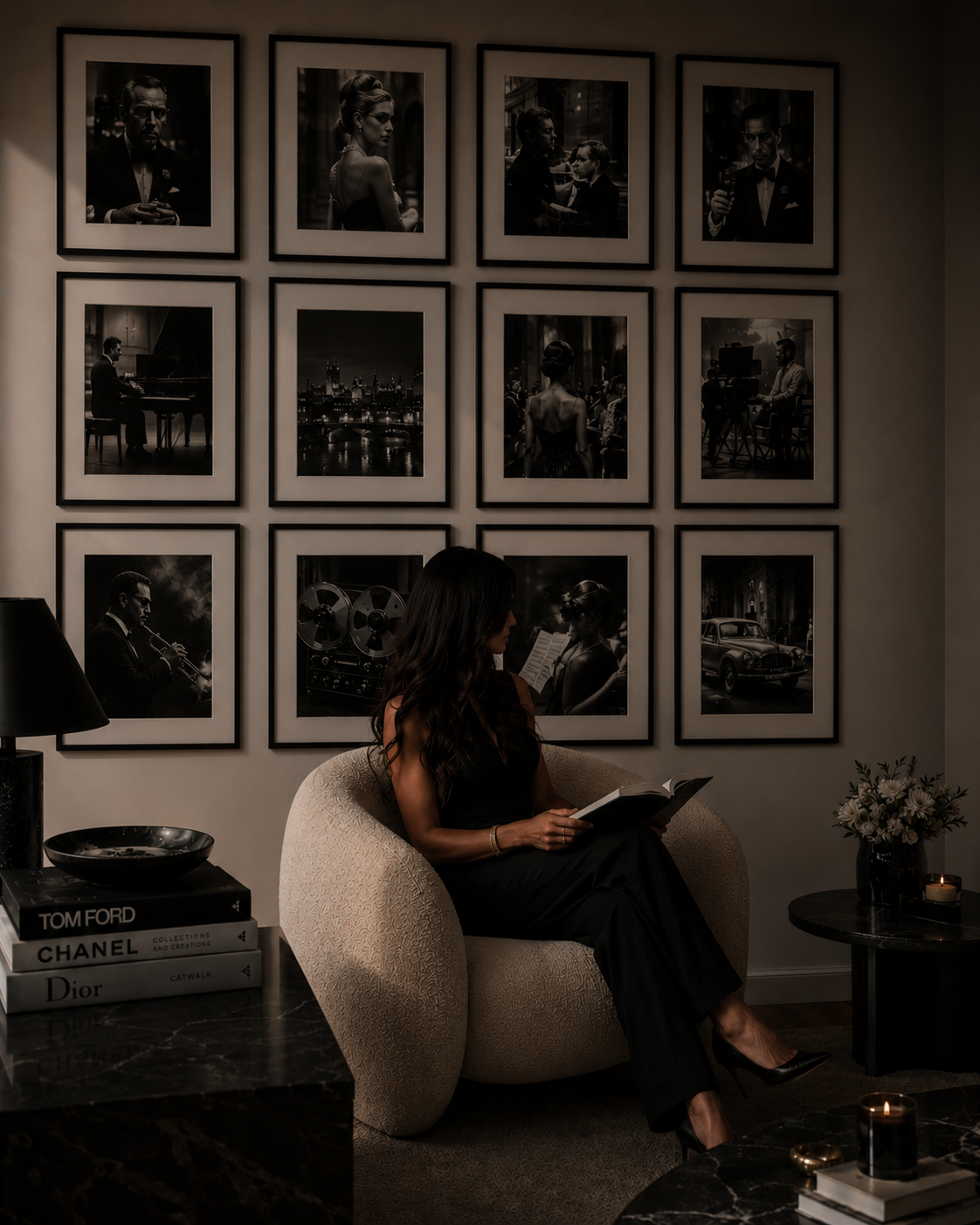
Artwork with black framing, textiles with subtle dark tones, and patterned fabrics help distribute black throughout the space in a softer way.
This prevents contrast from feeling abrupt.
How to incorporate this:
- Use black frames for artwork to create consistency
- Introduce cushions, rugs, or throws with subtle black detailing
- Mix black with softer tones like taupe, cream, or warm grey


Why this works:
- It softens stronger architectural contrasts
- It adds texture and visual interest
- It creates a more lived-in, layered aesthetic
This is where black becomes part of the atmosphere, not just the structure.
Where Black Accents Go Wrong
Black is undeniably powerful — but without restraint, it can quickly disrupt rather than refine a space.
One of the most common mistakes is using black without intention.
When accents feel scattered rather than repeated, the result lacks cohesion.
Similarly, mixing too many black finishes — matte, glossy, warm, cool — can create subtle inconsistencies that make a space feel unresolved.
Another misstep is overuse.
Too much black, particularly in rooms with limited natural light, can make an interior feel heavy or enclosed rather than sophisticated.
The most successful interiors treat black with discipline.
It is introduced deliberately, repeated thoughtfully, and always balanced with light and material.
How Much Black Should You Use?
In most interiors, black is most effective when used sparingly but strategically.
Rather than dominating the palette, it works best as a measured accent — placed where it creates clarity and contrast.
A useful guideline is to allow black to occupy a smaller portion of the visual field, while ensuring it appears consistently enough to feel intentional.
Often, this means:
- Introducing black in two to three key areas (such as architecture, furniture, or hardware)
- Using it to anchor focal points rather than fill the space
- Allowing lighter materials and natural light to remain dominant
The goal is not to add more black, but to place it where it has the greatest impact.
Where to Begin with Black Accents
Introducing black into an interior does not require a complete redesign.
In fact, the most effective approach is often gradual.
Begin with smaller, controlled elements — hardware, lighting, or framed artwork — where contrast can be introduced without overwhelming the space.
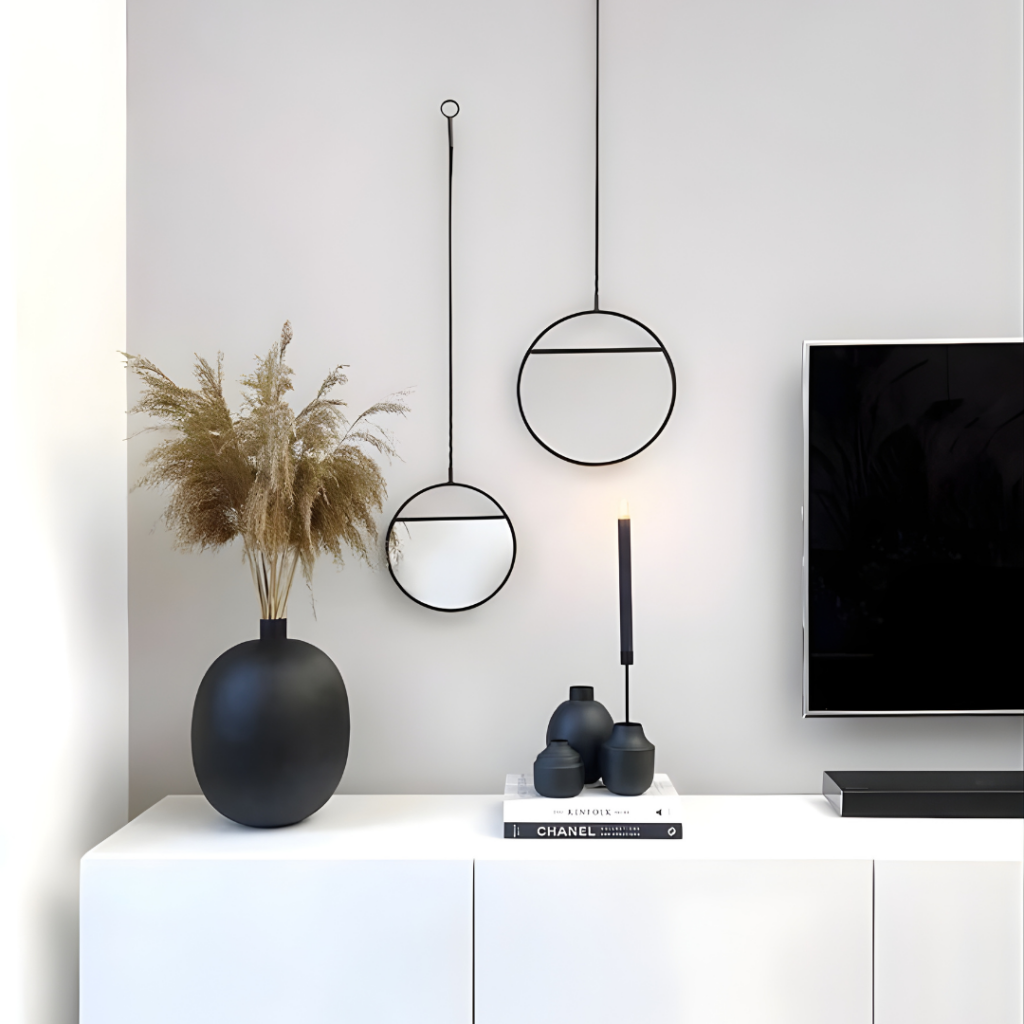
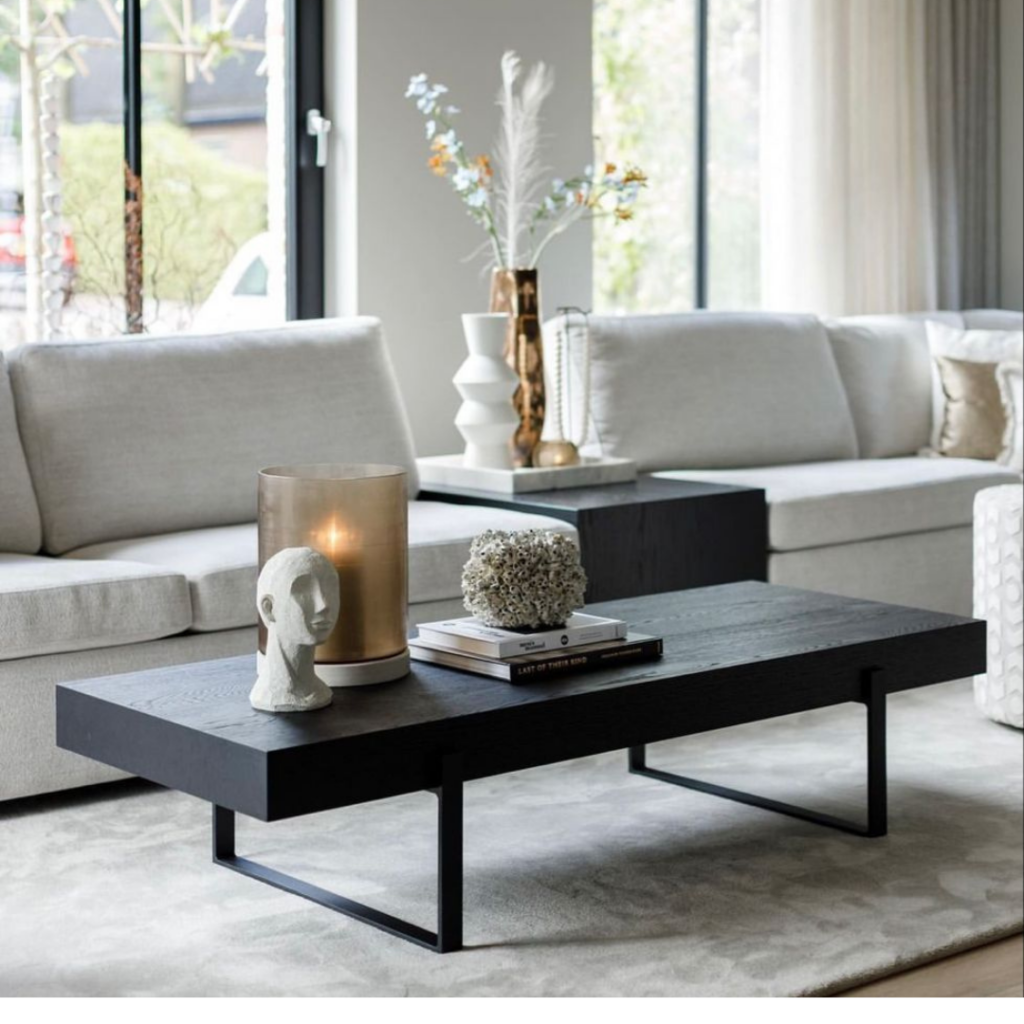
From there, consider adding a single grounding piece, such as a coffee table or light fixture.
Once the language of black is established, architectural elements — such as doors, trims, or window frames — can be introduced more confidently.
This layered approach allows the space to evolve naturally, ensuring that black accents feel integrated rather than imposed.
Final Thoughts
Black accents are not about boldness.
They are about clarity.
They define architecture, ground interiors, and introduce a level of refinement that is difficult to achieve through color alone.
The key lies in restraint — knowing where to apply black, and where to allow the space to breathe.
In thoughtful interiors, black is never overused.
It is placed with intention.
And in that intention, a space begins to feel elevated, composed, and complete.
Ready to Explore What’s Right for Your Home?
At Heather Robinson Designs, we believe great design is more than what you see — it’s how a space makes you feel, live, and connect every day. With over 20 years of experience, our team crafts interiors that marry beauty with purpose — where every detail works as hard as it looks.
Whether you’re refreshing a single room or reimagining your entire home, we help you invest wisely — turning your vision into a space that feels timeless, personal, and undeniably you.
→ Learn more about Heather Robinson Designs
→ Inquire about your renovation



Read the Comments +